


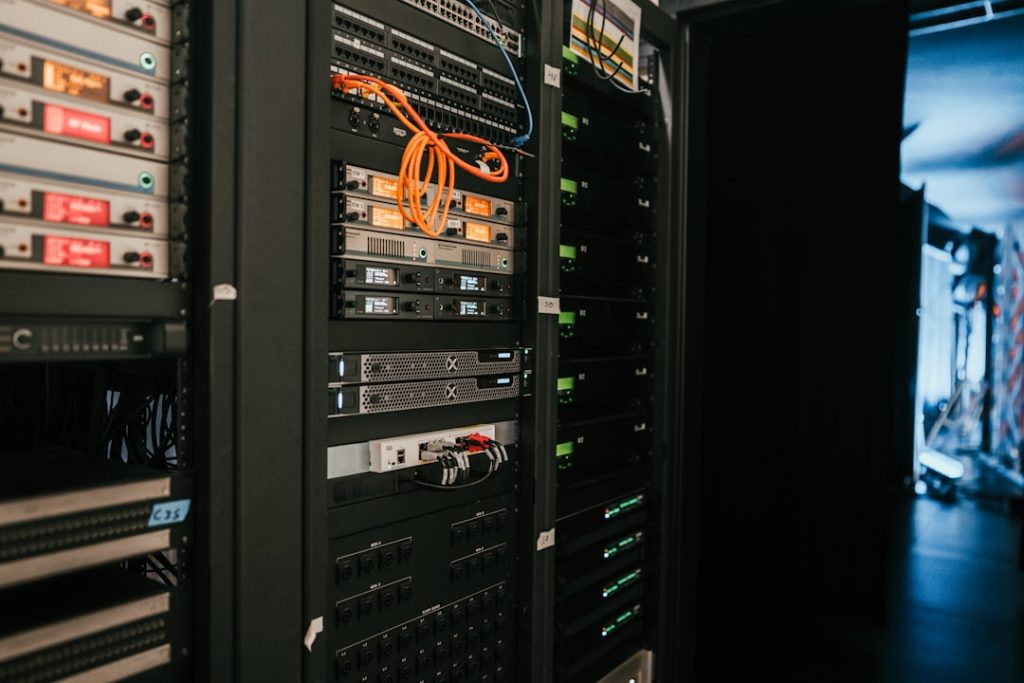
Reliable power is the foundation of every data center, whether it supports enterprise applications, cloud workloads, financial systems, healthcare platforms, or edge computing. A well-designed power architecture does more than keep servers running; it protects equipment, supports uptime commitments, improves operational visibility, and helps control energy costs over the lifetime of the facility.
TLDR: Data center power solutions depend on three core elements: UPS systems, PDUs, and the supporting electrical infrastructure that connects them safely and efficiently. For example, a 500 kW server environment designed with N+1 UPS redundancy can continue operating during a single UPS module failure without interrupting critical workloads. Intelligent rack PDUs can also help reduce stranded power capacity by 10–20% by showing actual load at the outlet or device level. The best results come from planning power capacity, redundancy, monitoring, and maintenance as one integrated system.
Why Power Architecture Matters
Data centers are highly sensitive environments. Even a short power interruption can cause application outages, corrupted data, failed transactions, and costly service-level agreement penalties. For this reason, power infrastructure must be engineered for continuity, safety, scalability, and visibility.
A typical data center power path begins with utility power, moves through switchgear and transformers, passes through an uninterruptible power supply, and is then distributed through power distribution units to racks and equipment. Backup generators, automatic transfer switches, batteries, and monitoring platforms are also commonly part of the design.
Uninterruptible Power Supply Systems
A UPS provides immediate backup power when the utility supply becomes unstable or fails. Its primary function is to bridge the gap between a power event and the start of backup generation, or to allow systems to shut down safely if longer-term backup is not available.
There are three common UPS topologies:
- Standby UPS: Used mostly for smaller loads and basic protection. It switches to battery when input power fails.
- Line-interactive UPS: Offers voltage regulation and is suitable for small server rooms or network closets.
- Online double-conversion UPS: The standard choice for mission-critical data centers because it continuously conditions power and isolates equipment from many input disturbances.
Modern data centers often use modular UPS systems. These allow operators to add capacity as demand grows, which reduces upfront oversizing and improves efficiency. For example, a facility that initially needs 300 kW may deploy a modular system capable of scaling to 600 kW, adding power modules only when additional IT load is installed.
UPS Redundancy Models
Redundancy is central to data center power design. The right model depends on the business impact of downtime and the budget available.
- N: The exact capacity needed to support the load, with no redundancy.
- N+1: One additional component is available if a module fails or requires maintenance.
- 2N: A completely duplicated power path supports the full critical load.
- 2N+1: Dual independent systems plus an additional redundant component, typically used in very high-availability environments.
For many enterprise and colocation environments, N+1 provides a practical balance between resilience and cost. Financial trading, emergency services, and hyperscale platforms may justify 2N or higher because downtime can have severe operational or regulatory consequences.
Battery Choices and Runtime Planning
UPS performance depends heavily on energy storage. Traditional valve-regulated lead-acid batteries remain common, but lithium-ion batteries are increasingly used because they offer longer service life, reduced footprint, faster recharge times, and better monitoring capabilities.
Runtime should be based on realistic operating scenarios. A facility with reliable generators may only need 5–10 minutes of UPS runtime, enough for generator startup and load transfer. A smaller edge site without generator backup may require longer runtime to allow graceful shutdown or continued operation during short utility outages.
Battery maintenance is critical. Weak batteries are one of the most common causes of UPS failure. Regular impedance testing, thermal monitoring, and scheduled replacement help reduce risk.
Power Distribution Units
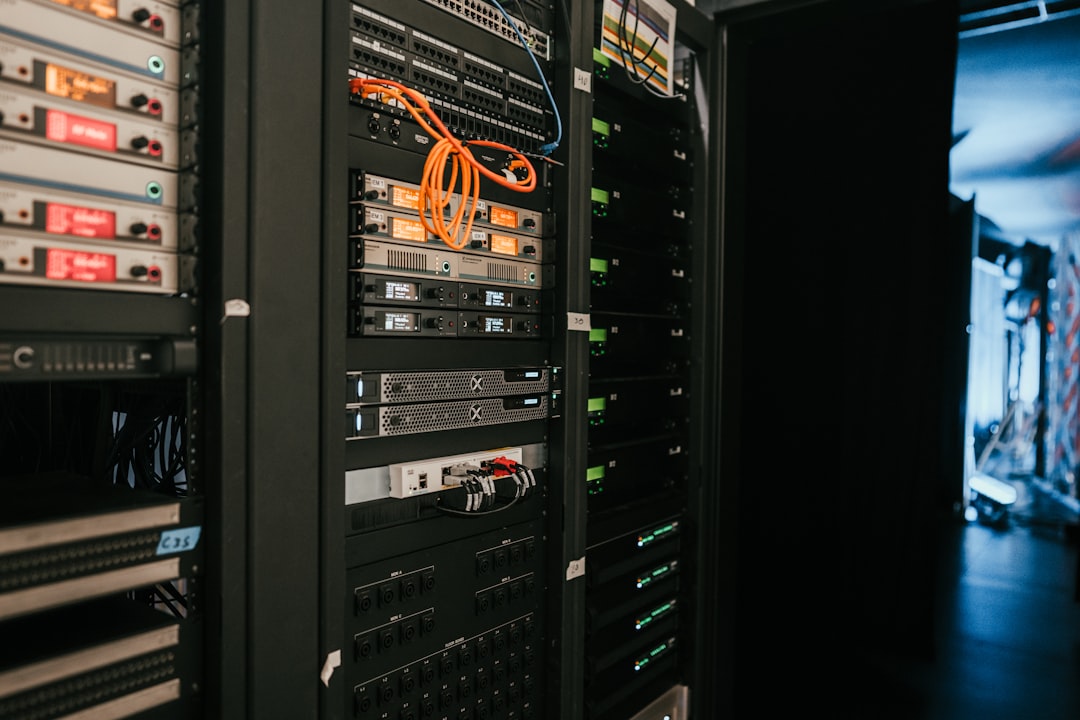
PDUs distribute conditioned power from upstream electrical systems to IT equipment. They exist at both the floor level and the rack level. In modern data centers, rack PDUs are especially important because they provide the final connection between infrastructure and servers, storage, and network devices.
Common rack PDU types include:
- Basic PDUs: Reliable power distribution with no advanced monitoring.
- Metered PDUs: Display load data locally or remotely to help avoid overloads.
- Monitored PDUs: Provide network-based visibility into current, voltage, power factor, and energy use.
- Switched PDUs: Allow remote outlet control, useful for rebooting devices or managing power sequencing.
- Intelligent PDUs: Combine monitoring, switching, environmental sensors, and integration with data center infrastructure management platforms.
Why Intelligent PDUs Are Increasingly Important
As server densities rise, power management at the rack level becomes more important. Intelligent PDUs help operators understand actual consumption instead of relying only on nameplate ratings. This can reveal underused circuits, overloaded phases, and inefficient equipment.
For example, a rack rated for 12 kW may consistently draw only 7.5 kW. Without accurate monitoring, operators may assume the rack is near capacity and avoid using available power. With outlet-level data, they can safely increase utilization while staying within electrical and cooling limits.
Intelligent PDUs also support capacity planning. Historical load data helps teams forecast where new equipment can be installed, when additional circuits are needed, and how close the facility is to power or cooling constraints.
Core Electrical Infrastructure
UPS systems and PDUs depend on a broader infrastructure that must be designed with equal care. This includes transformers, switchgear, busways, panelboards, breakers, grounding systems, transfer switches, and generators.
Switchgear controls and protects electrical circuits. It isolates faults, supports maintenance, and helps route power safely. Automatic transfer switches move loads between utility and generator power. Busway systems are often used in scalable environments because they allow flexible power distribution across rows of racks.
Grounding and bonding are also essential. Poor grounding can create safety hazards, increase equipment failure risk, and contribute to electrical noise. A professional design should comply with applicable standards and local electrical codes.
Generator Backup and Fuel Strategy
Generators provide long-duration backup when utility outages continue beyond the UPS battery window. Diesel generators remain common due to proven performance and high load capacity, though natural gas and alternative fuel solutions are also used in some facilities.
Generator planning should address more than rated capacity. Operators must consider startup time, fuel availability, emissions permits, maintenance schedules, load testing, and refueling contracts. A generator that cannot be refueled during a regional outage may not deliver the resilience expected on paper.
Monitoring, Testing, and Maintenance
Power systems should be monitored continuously. Key metrics include UPS load, battery health, input voltage, output voltage, frequency, rack power draw, phase balance, breaker status, temperature, and humidity. Alerts should be configured with practical thresholds to prevent both missed warnings and alarm fatigue.
Recommended maintenance practices include:
- Regular UPS inspections to check fans, capacitors, batteries, alarms, and firmware.
- Load bank testing for generators and UPS systems to verify performance under realistic conditions.
- Thermal imaging to identify loose connections or overheating components.
- Breaker testing to confirm protective devices operate correctly.
- Rack audits to confirm equipment is connected to the correct A and B power feeds.
Efficiency and Sustainability
Power reliability must be balanced with efficiency. UPS systems operating at very low loads may waste energy, while oversized infrastructure can increase capital and operating costs. High-efficiency UPS modes, right-sized modular systems, and careful capacity planning can reduce losses.
Power usage effectiveness, or PUE, remains a common efficiency metric. While PUE does not show every aspect of sustainability, it helps compare total facility energy use against IT energy use. Improving airflow management, reducing stranded capacity, and using accurate rack-level monitoring can all contribute to better energy performance.
Practical Design Considerations
Before selecting equipment, teams should define the facility’s availability goals, IT growth forecast, rack density, maintenance strategy, and acceptable risk level. A small enterprise server room may not need the same design as a large colocation facility, but both require disciplined planning.
Important questions include:
- What is the current and projected critical IT load?
- How much downtime can the business tolerate?
- Is redundancy required at the UPS, PDU, circuit, or utility level?
- Will racks use single or dual power feeds?
- How will power data be monitored and reported?
- Can the infrastructure be maintained without shutting down critical loads?
Conclusion
Data center power solutions must be treated as an integrated system, not as separate equipment purchases. UPS systems provide continuity, PDUs deliver and monitor power at the rack level, and the surrounding infrastructure ensures safe, scalable distribution. When these components are properly designed, monitored, and maintained, they reduce downtime risk and support long-term operational stability.
A serious power strategy starts with accurate load data, clear redundancy requirements, and realistic growth planning. From there, organizations can choose the right UPS topology, PDU intelligence level, battery technology, and backup generation model. The result is a power environment that protects critical systems today while remaining adaptable for tomorrow’s demands.