


As artificial intelligence continues to advance, organizations are increasingly shifting from using generic pre-trained models to building highly specialized systems tailored to their data and objectives. Fine-tuning has emerged as one of the most effective ways to customize large models, but it also introduces complexity in experiment tracking, data management, reproducibility, and performance optimization. This is where AI fine-tuning platforms such as Weights & Biases play a critical role, providing infrastructure and visibility for training custom models at scale.
TLDR: AI fine-tuning platforms like Weights & Biases help teams manage, monitor, and optimize the training of custom machine learning models. They offer experiment tracking, visualization tools, dataset versioning, and collaboration features that dramatically improve reproducibility and performance. These platforms are essential for scaling model development efficiently and reducing costly training errors. For organizations investing in custom AI, they provide structure, insights, and measurable control.
Fine-tuning refers to the process of taking a pre-trained model—often a large language model, vision transformer, or other deep learning architecture—and training it further on domain-specific data. While the concept sounds straightforward, the execution quickly becomes complicated. Teams must manage hyperparameters, training datasets, validation metrics, hardware utilization, and experiment comparisons. Without a dedicated system for organizing these moving parts, progress becomes chaotic and difficult to replicate.
The Growing Complexity of Custom Model Training
Modern AI models consist of millions or billions of parameters. Adjusting them effectively requires:
- Hyperparameter tuning (learning rate, batch size, optimizer selection)
- Dataset tracking and preprocessing pipelines
- Performance monitoring across training epochs
- Hardware resource optimization across GPUs or distributed systems
- Collaboration among data scientists, ML engineers, and stakeholders
Without centralized tracking, teams often rely on spreadsheets, disconnected logs, and ad hoc scripts. This leads to problems such as irreproducible results, wasted compute resources, and difficulty understanding why one model outperforms another.
AI fine-tuning platforms solve these challenges by providing structured environments designed specifically for experimentation at scale.
What Platforms Like Weights & Biases Actually Do
Weights & Biases (often abbreviated as W&B) is widely recognized for its experiment tracking and model management capabilities. It integrates directly into machine learning workflows, logging data automatically during training.
Key functions typically include:
1. Experiment Tracking
Every model run is recorded with detailed metadata, including:
- Hyperparameters
- Code versions
- Dataset versions
- Hardware configurations
- Performance metrics over time
This allows teams to compare runs side by side and identify which adjustments led to performance improvements.
2. Real-Time Visualization
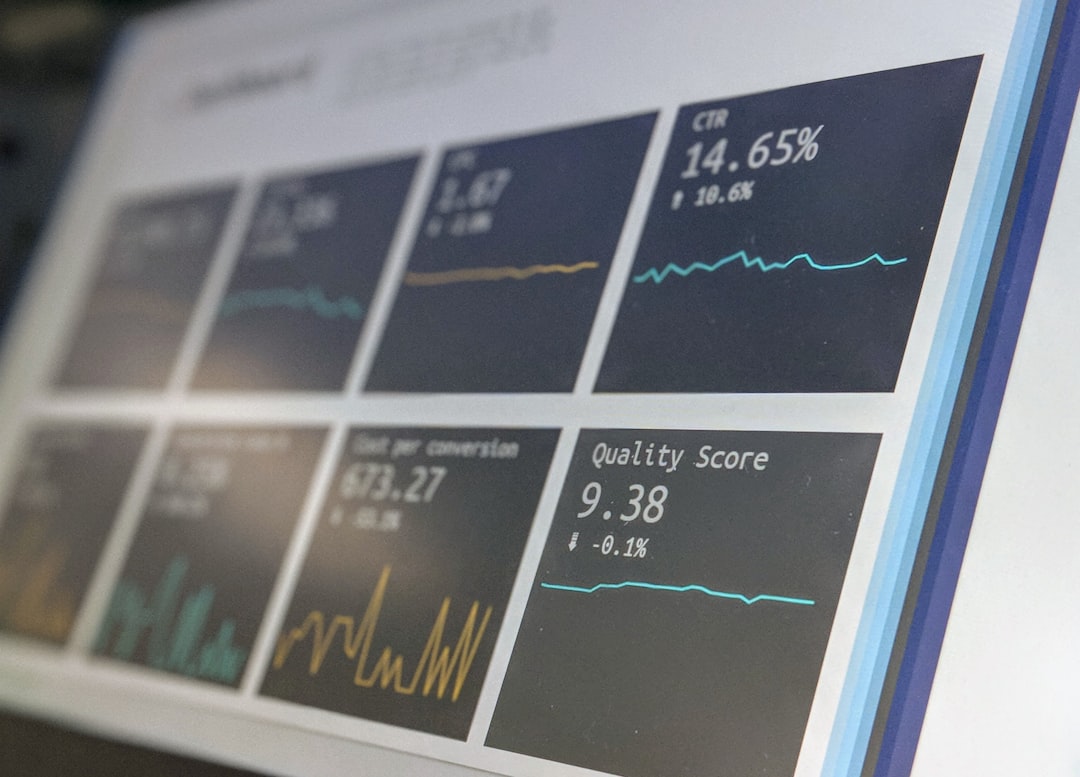
Training deep learning models can take hours or days. Visualization dashboards display metrics such as:
- Training and validation loss curves
- Accuracy trends
- Gradient behavior
- Confusion matrices
These real-time insights help detect issues like overfitting, vanishing gradients, or unstable learning early in the process.
3. Hyperparameter Optimization
Fine-tuning often requires dozens or hundreds of experiments to find the optimal configuration. Platforms automate hyperparameter sweeps, running multiple experiments systematically to discover promising parameter combinations.
4. Dataset and Model Versioning
Reproducibility is a cornerstone of reliable AI development. Fine-tuning platforms log dataset versions and model artifacts, ensuring that every experiment can be recreated exactly as it was originally run.
Why Fine-Tuning Platforms Matter in 2026
As AI adoption spreads across industries—healthcare, finance, retail, manufacturing—the pressure to deliver accurate and explainable models increases. Custom models are no longer optional; they are competitive differentiators.
However, custom development introduces risks:
- Escalating cloud compute costs
- Experiment sprawl
- Lack of auditability
- Regulatory compliance challenges
Platforms like Weights & Biases provide governance and structure. They make it clear what was trained, how it was trained, and why it behaves a certain way. This transparency is particularly important in regulated sectors.
Improving Collaboration Across Teams
AI development is rarely a solo effort. A typical workflow involves:
- Data engineers preparing datasets
- ML engineers configuring training pipelines
- Data scientists designing experiments
- Product stakeholders evaluating performance
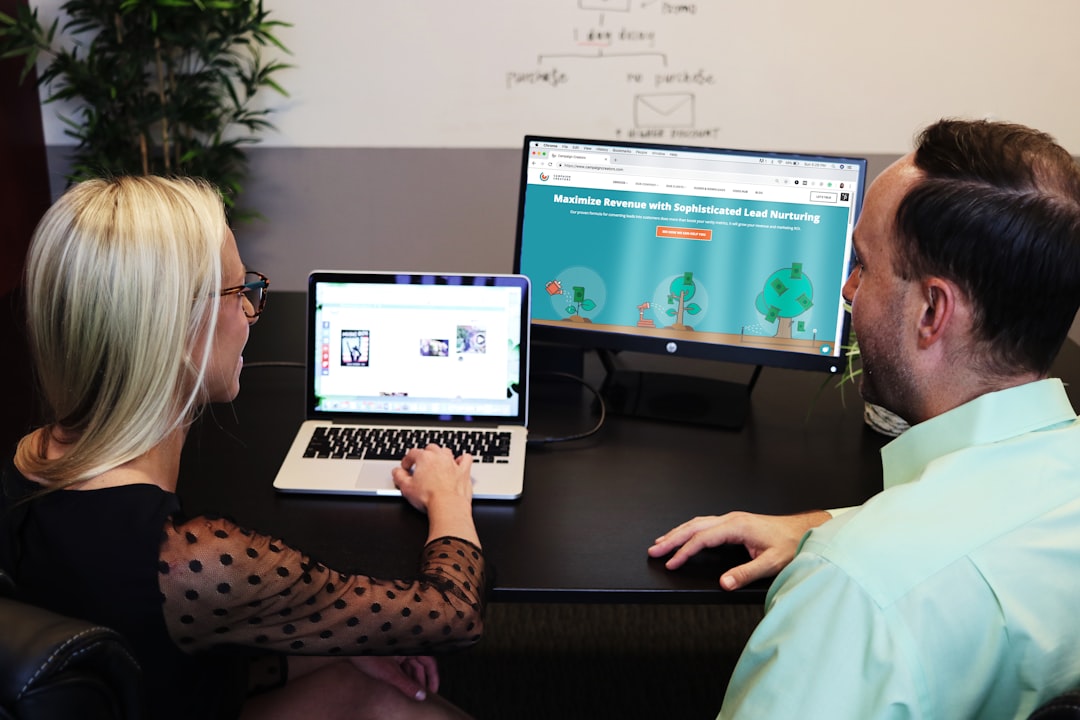
Without shared visibility, miscommunication becomes common. Fine-tuning platforms centralize experiment results in dashboards accessible to everyone. Team members can comment on runs, compare results visually, and track progress toward performance goals.
This structured collaboration reduces duplication of effort and accelerates iteration cycles.
The Role of Automation in Hyperparameter Sweeps
Hyperparameters dramatically influence model performance, yet selecting optimal values manually is inefficient. Fine-tuning platforms automate this process using:
- Grid search
- Random search
- Bayesian optimization
Automation distributes experiments across available hardware, logs results centrally, and identifies top-performing runs. This not only saves time but maximizes GPU utilization.
For organizations training large language models or multimodal systems, such efficiency can translate into significant cost savings.
Scaling From Research to Production
A common bottleneck in AI projects is transitioning from experimentation to deployment. Many promising models stall because their development process lacks documentation and reproducibility.
Fine-tuning platforms address this gap by maintaining:
- Complete experiment history
- Version-controlled artifacts
- Performance benchmarks
- Hardware usage logs
This structured record simplifies handoffs from research teams to production engineers. It also supports model auditing and long-term maintenance.
Image not found in postmetaDistributed Training and Hardware Optimization
Modern AI workloads frequently require distributed GPU clusters. Coordinating experiments across multiple nodes introduces additional complexity, including synchronization issues and resource tracking.
Platforms like Weights & Biases integrate with distributed frameworks, monitoring hardware usage and performance metrics across all nodes. Teams gain insight into:
- GPU utilization rates
- Memory bottlenecks
- Training speed variations
- Scaling efficiency
This visibility ensures infrastructure is used optimally and helps justify investment in high-performance computing resources.
Security and Compliance Considerations
As AI systems handle sensitive data, security becomes paramount. Enterprise-focused fine-tuning platforms offer features such as:
- Role-based access control
- Encryption at rest and in transit
- Private cloud or on-premise deployment options
- Audit logs for regulatory compliance
For industries such as healthcare or finance, these controls are essential when fine-tuning models on confidential datasets.
Competitive Advantages of Using Fine-Tuning Platforms
Organizations that adopt structured fine-tuning tools often experience:
- Faster iteration cycles
- Reduced compute waste
- Improved reproducibility
- Stronger cross-team collaboration
- Clearer performance benchmarking
Over time, these improvements compound, allowing teams to develop higher-performing models in less time. In competitive markets, this speed can determine market leadership.
The Future of AI Fine-Tuning Platforms
Looking ahead, fine-tuning platforms are expanding beyond experiment tracking into full ML lifecycle management. Emerging trends include:
- Integrated model evaluation suites for bias and fairness
- Automated dataset diagnostics
- Direct integration with deployment pipelines
- Support for multimodal and reinforcement learning workflows
As larger foundation models become the norm, the need for structured experimentation will only grow. Fine-tuning platforms are evolving into central command centers for AI development.
Conclusion
Fine-tuning custom AI models offers immense opportunity—but also significant complexity. Platforms such as Weights & Biases provide the structure, transparency, and automation required to manage this complexity effectively. By centralizing experiment tracking, enabling reproducibility, and optimizing resource usage, they help organizations transform model training from a chaotic process into a systematic discipline.
For teams serious about building competitive, reliable AI systems, adopting a fine-tuning platform is no longer optional—it is foundational.
FAQ
1. What is AI fine-tuning?
AI fine-tuning is the process of taking a pre-trained model and training it further on domain-specific data to improve performance on specialized tasks.
2. Why use a platform like Weights & Biases?
Such platforms provide experiment tracking, visualization tools, hyperparameter optimization, and reproducibility features, making model development more organized and efficient.
3. How does experiment tracking improve model performance?
Experiment tracking allows teams to compare runs systematically, identify what changes led to improvements, and eliminate guesswork from model optimization.
4. Are fine-tuning platforms only for large enterprises?
No. While enterprises benefit from governance and compliance features, startups and research teams also gain efficiency and collaboration advantages.
5. Can fine-tuning platforms reduce cloud computing costs?
Yes. By optimizing hyperparameter sweeps, monitoring hardware usage, and reducing redundant experiments, these platforms help minimize wasted computational resources.
6. Do these platforms support distributed training?
Most modern fine-tuning platforms integrate with distributed training frameworks and monitor performance across multiple GPUs or clusters.
7. Is reproducibility really that important?
Absolutely. Reproducibility ensures that results can be validated, audited, and reliably improved upon—making it essential for both research integrity and regulatory compliance.
8. What industries benefit most from fine-tuning platforms?
Industries with specialized data needs—such as healthcare, finance, retail, and manufacturing—benefit significantly from structured fine-tuning workflows.