


The semiconductor industry has undergone profound changes over the last seven decades, and within its evolution lies the story of an important player: Freescale Semiconductor. Originally a division of Motorola, Freescale played a crucial role in developing microprocessors, embedded systems, and electronic components that powered some of the world’s biggest technological advances — from automotive systems to industrial controls and mobile communications.
TLDR
Freescale Semiconductor, once a division of Motorola, emerged as a leading designer of embedded processing solutions before being acquired by NXP Semiconductors in 2015. The company made pioneering contributions to microcontrollers and embedded systems, especially in the automotive and industrial sectors. Its transformation over the decades mirrors the broader shifts within the global semiconductor industry. Even after its merger with NXP, Freescale’s legacy continues to influence digital innovation and hardware architecture today.
The Origins: From Motorola to Freescale
Freescale’s story begins with Motorola, one of the 20th century’s most influential technology companies. In the mid-20th century, Motorola was at the forefront of electronics and communications equipment, particularly radios and later transistors. By the 1960s and 1970s, the company had begun designing integrated circuits and microprocessors. Notably, Motorola’s 68000 series microprocessors became popular across computing platforms, particularly within Apple’s early Macintosh computers.
As global competition increased and the chip-making business became more specialized, Motorola decided to split off its semiconductor division. This structural realignment led to the creation of Freescale Semiconductor, Inc. in 2004, marking it as an independent company focused solely on semiconductor innovation and manufacturing.
Freescale transitioned onto the public stage with an Initial Public Offering (IPO), raising approximately $1.6 billion — the largest U.S. tech IPO of that year. This monetary influx enabled it to refine its focus on embedded processing and system-on-chip (SoC) design.
Technological Focus and Product Lines
Unlike companies that concentrated on consumer electronics or high-performance computing, Freescale’s technological portfolio was tightly aligned with embedded systems. These are specialized computing systems that operate within larger mechanical or electrical systems. They are crucial for:
- Automotive control systems
- Industrial automation and robotics
- Networking and telecom infrastructure
- Consumer electronics and mobile devices
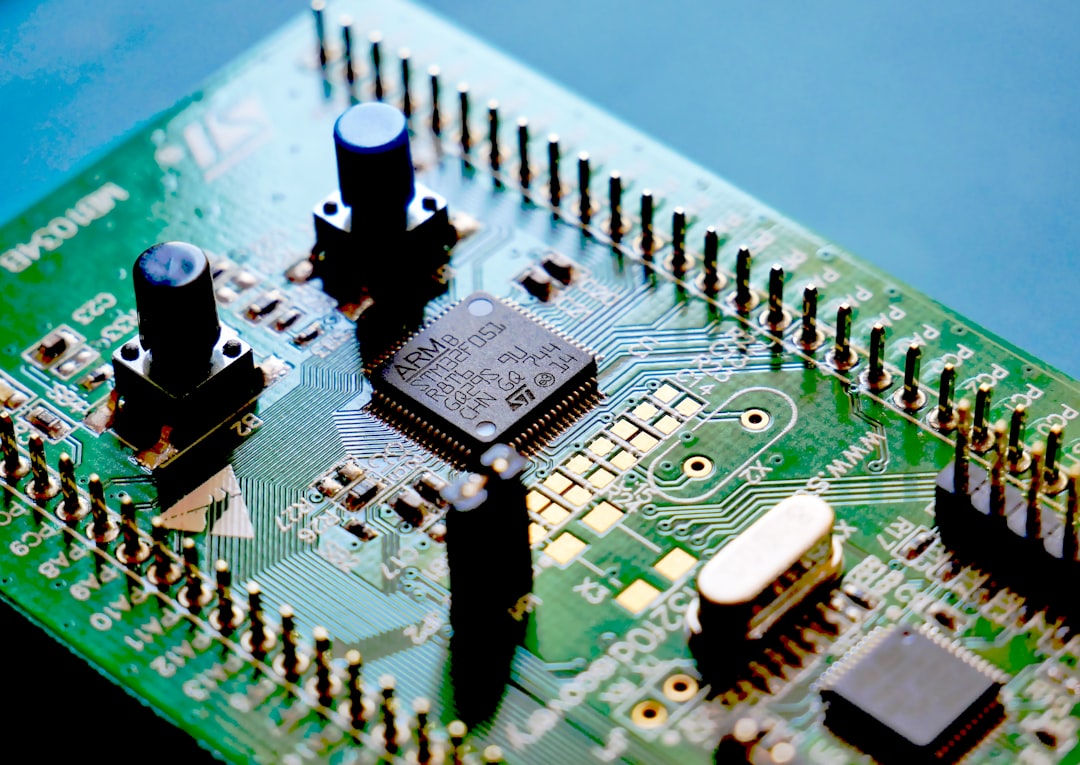
One of Freescale’s most noteworthy offerings was its PowerPC architecture, co-developed with IBM and Apple. PowerPC chips powered generations of Apple computers and embedded technologies in automotive and aerospace fields. As the market continued to demand optimized, system-specific computing performance, Freescale advanced its portfolio to include:
- MPC500 and MPC800 series microcontrollers
- QorIQ communications processors
- i.MX application processors for multimedia applications
- Digital Signal Processors (DSPs) for audio and signal manipulation
By focusing on these essential, though less-glamorous, computing tasks, Freescale filled a critical gap in applied electronics. Its products became foundational to systems where reliability and deterministic performance were paramount over brute computing power.
Industry Impact and Market Applications
Freescale’s greatest impact was arguably felt in the automotive electronics market. With the rise of complex automotive systems requiring Electronic Control Units (ECUs), Anti-lock Braking Systems (ABS), airbag controllers, and infotainment platforms, Freescale became a go-to provider for car manufacturers worldwide. The company partnered with major automakers like Ford, General Motors, and BMW.
Moreover, as the automotive sector pushed toward electrification and Advanced Driver Assistance Systems (ADAS), Freescale equipped engineers with power-efficient, safety-focused SoCs, complemented by real-time processing and secure data handling. In many ways, Freescale was instrumental in shaping the increasingly digital core of the modern automobile.
In industrial settings, its microcontrollers and application processors enabled the seamless operation of complex machinery. Freescale’s chips were also commonly used in telecommunications, helping to power routers, switches, and other networking equipment that demanded stable, high-speed data processing with optimized hardware-level controls.

Challenges in a Rapidly Changing Market
Despite its strong product lines and market presence in niche sectors, Freescale operated in an industry notorious for its volatility. Rapid technological advancement, global supply chain dependencies, and pricing pressures placed enormous strain on mid-sized semiconductor firms. Gigantic players like Intel, Qualcomm, and NVIDIA dominated consumer and enterprise computing sectors, tightening the competitive room for niche specialized vendors.
One of the firm’s longest-standing strengths — embedded processing — also became a double-edged sword. As general-purpose chips grew increasingly powerful and flexible, more companies chose to incorporate them into systems where dedicated embedded solutions had previously reigned supreme. Thus, Freescale had to innovate faster to demonstrate clear differentiation.
From 2006 to 2012, Freescale also struggled with financial constraints following its leveraged buyout by a private equity consortium led by Blackstone Group. The significant debt burden limited its ability to invest flexibly in R&D and new infrastructure, causing it to lose ground in several emerging technology areas.
Merger with NXP and Legacy
In 2015, Freescale Semiconductor was acquired by NXP Semiconductors N.V. for approximately $11.8 billion. The merger created one of the largest automotive semiconductor suppliers in the world and allowed the combined entity to consolidate expertise in areas such as embedded systems, secure identification, and vehicle communication protocols.
NXP had similar roots in the spinout of Philips Semiconductors and brought significant strength in near-field communication (NFC), digital security, and automotive radar. Together, NXP and Freescale blended their portfolios to offer a truly end-to-end semiconductor solution tailored to major growth categories:
- Autonomous vehicles and electric powertrains
- Industrial IoT (Internet of Things)
- Secure edge processing systems
This fusion was a turning point in semiconductor consolidation, highlighting the growing demand for vertical integration and hardware-software synergy in system design. Many of Freescale’s key engineering teams, architectural designs, and product pipelines continued boding well for post-merger product offerings.
Freescale’s Contribution to Semiconductor Evolution
The broader history of the semiconductor industry is one of radical transformation — from discrete components to monolithic integration, from general-purpose processors to specialized SoCs, from consumer innovation to industrial automation. In each of these chapters, Freescale played a distinctive and high-impact role.
Key contributions from Freescale include:
- Driving adoption of PowerPC architecture across computing and embedded applications
- Pioneering low-power logic design, crucial to mobile and automotive electronics
- Bringing embedded intelligence to complex control systems at scale
- Developing secure microcontrollers foundational to modern automotive cybersecurity
Although the name Freescale has retired from the commercial landscape post-2015, its DNA lives on in NXP products, design philosophies, and application priorities. For engineers and technologists familiar with embedded systems, Freescale’s innovations remain a benchmark of reliability, flexibility, and system-aware design.
Conclusion
Freescale Semiconductor exemplified the mid-sized specialist firm that enabled significant advancements in systems engineering, even as the industry consolidated around fewer but larger megafirms. Its work in automotive, networking, and industrial automation helped lay the foundation for technologies that billions depend on daily, from safe driving to reliable mobile infrastructure.
By tracing its path from Motorola’s labs to integration within NXP Semiconductors, we obtain a clearer view of how the semiconductor industry has adapted to new demands, globalized challenges, and technical revolutions. In that journey, Freescale’s impact is both measurable and enduring.